
Hidden HVAC Mold in Toronto Condos: Signs, Risks, and How Hudson Fixes It
Learn how hidden mold forms in condo fan coils and heat pumps, warning signs to watch for, and how Hudson HVAC safely removes and prevents it.
- Hudson HVAC
- 4 min read
Hidden HVAC Mold in Toronto Condos: Signs, Risks, and How Hudson Fixes It
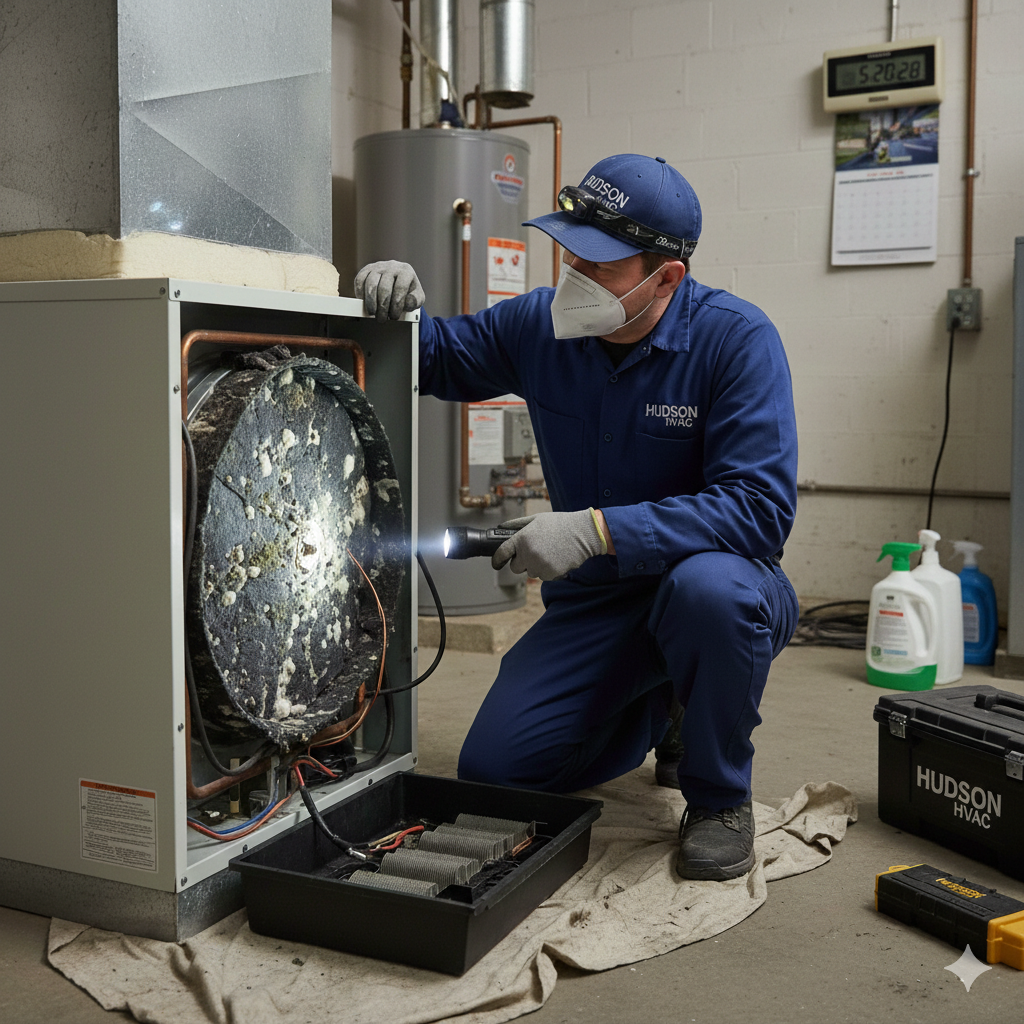
Quick summary: Mold inside your condo’s fan coil or heat pump often grows out of sight—on insulation, coils, and drain pans. This guide explains how to recognize hidden mold, why it forms, and when to call Hudson HVAC for professional remediation and long-term prevention.
The fast diagnosis (what this usually means)
If you’re dealing with hidden HVAC mold, you may notice:
- A musty or “damp basement” smell when your system runs
- Increased allergies, coughing, or irritation indoors
- Condensation or water staining near your fan coil cabinet
- Reduced airflow or inconsistent heating/cooling
- Dark or fuzzy patches on visible insulation (when accessible)
In Toronto condos, these symptoms often point to moisture buildup inside compact HVAC units, where mold can grow unnoticed.
Common causes (what’s actually happening)
Mold needs two things: moisture and organic material. Condo HVAC systems provide both.
The most common causes include:
- Clogged or damaged drain pans that allow water to sit
- High humidity inside suites, especially in summer
- Poor airflow from dirty filters or coils
- Aging insulation that absorbs moisture
- Infrequent maintenance of fan coils and heat pumps
Over time, condensation from cooling cycles soaks into insulation and dust, creating the perfect environment for mold growth.
What you can do right now (safe steps)
If you suspect HVAC mold, take these safe steps:
- Replace or clean your air filter
- Run your exhaust fans to reduce indoor humidity
- Avoid disturbing visible mold (do not scrub or vacuum it)
- Take clear photos if you can safely see inside the unit
- Note any odors, leaks, or recent water issues
Avoid using household cleaners inside your HVAC system. Improper cleaning can spread spores or damage components.
When to call a professional
You should contact an HVAC professional if:
- Musty odors persist for more than a few days
- You see mold on insulation, coils, or drain pans
- There is visible water pooling in the unit
- You experience repeated respiratory irritation
- Your system shuts down or loses performance
In winter, moisture combined with poor airflow can also lead to system failure—making early intervention especially important in Toronto’s climate.
Typical timeline & what to expect
When Hudson HVAC inspects for mold, you can expect:
- Initial assessment of airflow, moisture, and visible contamination
- Internal inspection of insulation, coils, and drainage
- Targeted cleaning and treatment using approved methods
- Repairs or part replacement if needed
- Prevention recommendations for long-term protection
Most in-suite mold remediation visits take 1–3 hours, depending on severity. Providing photos and details about odors or leaks can help speed up diagnosis.
Delays often occur when access is limited or when major drainage repairs are required.
Cost factors (if relevant)
The cost of HVAC mold remediation depends on:
- Extent of mold growth
- Condition of insulation and drain pans
- Need for component replacement
- Accessibility of the unit
- History of leaks or water damage
Minor cleanings are usually more affordable, while advanced contamination may require partial rebuilds.
FAQs
Is HVAC mold dangerous?
Mold can worsen allergies, asthma, and respiratory symptoms. While not all mold is toxic, prolonged exposure indoors should always be addressed.
Can I clean HVAC mold myself?
Surface wiping rarely solves the problem. Mold often grows inside insulation and hidden components, requiring professional equipment and training.
How often should my condo system be inspected?
Most condo fan coils and heat pumps should be inspected annually to prevent moisture and mold issues.
Will mold come back after cleaning?
It can, if moisture problems aren’t fixed. Proper drainage, airflow, and maintenance are key to prevention.
Does mold affect system efficiency?
Yes. Mold and moisture restrict airflow, strain components, and can shorten your unit’s lifespan.
Next steps (CTA)
If you suspect mold in your condo HVAC system, Hudson offers professional solutions including:
- Comprehensive HVAC mold remediation
- Preventive fan coil maintenance and heat pump maintenance
- Targeted drain pan cleaning and repair
Early action protects your air quality and helps avoid costly repairs.
If you want help, contact us to book an inspection with Hudson HVAC.
Contact Hudson
- https://hudsonhvac.ca/contact
- 📞 +1 (437) 448-0640
- 📧 service@hudsonhvac.ca