
Condo Fan Coil Repair in Toronto: Quick Troubleshooting for Common Issues
Toronto condo fan coil acting up? Learn the most common symptoms, what they mean, safe at-home checks, and when to call a pro.
- Hudson HVAC
- 6 min read
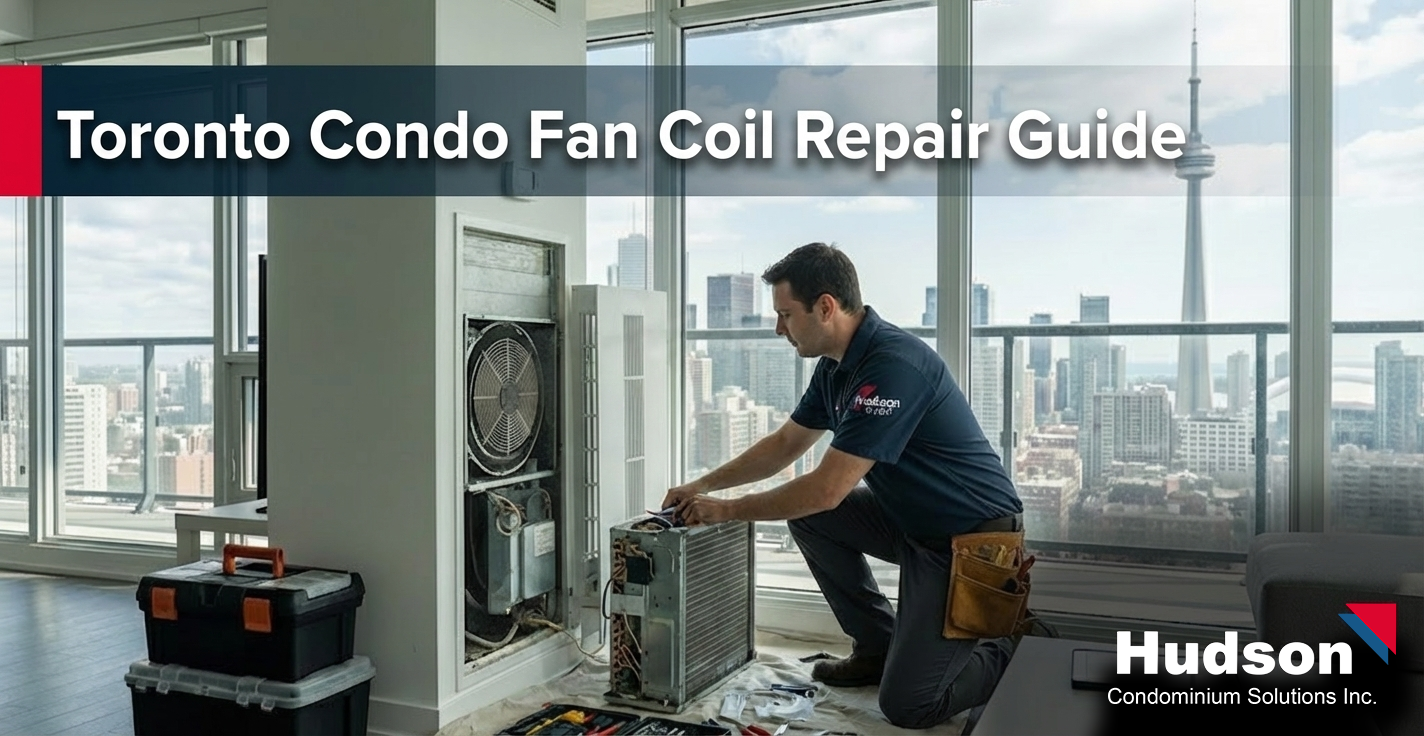
Condo Fan Coil Repair in Toronto: At-Home Troubleshooting for Common Issues
Quick summary: If your Toronto condo fan coil isn’t heating, cooling, or blowing properly, the symptoms usually point to a short list of common issues. This guide helps you do safe, basic checks at home, recognize red flags (like leaks), and know when it’s time to call a professional.
The fast diagnosis (what this usually means)
- No air blowing at all → often a thermostat setting issue, power/schedule issue, or a fan/blower problem
- Air is blowing but not cold (in summer) → cooling mode not enabled, building seasonal changeover, valve/actuator issue, or low airflow due to a dirty filter/coil
- Air is blowing but not warm (in winter) → heating mode not enabled, building seasonal changeover, valve/actuator issue, or airflow restriction
- Weak airflow → dirty filter, blocked return grille, coil buildup, or a tired blower motor
- Rattling, buzzing, or scraping noise → loose panel/screw, worn fan motor, or something rubbing in the blower assembly
- Water under the unit / damp ceiling below → drain pan or condensate drainage issue (treat as urgent to avoid damage)
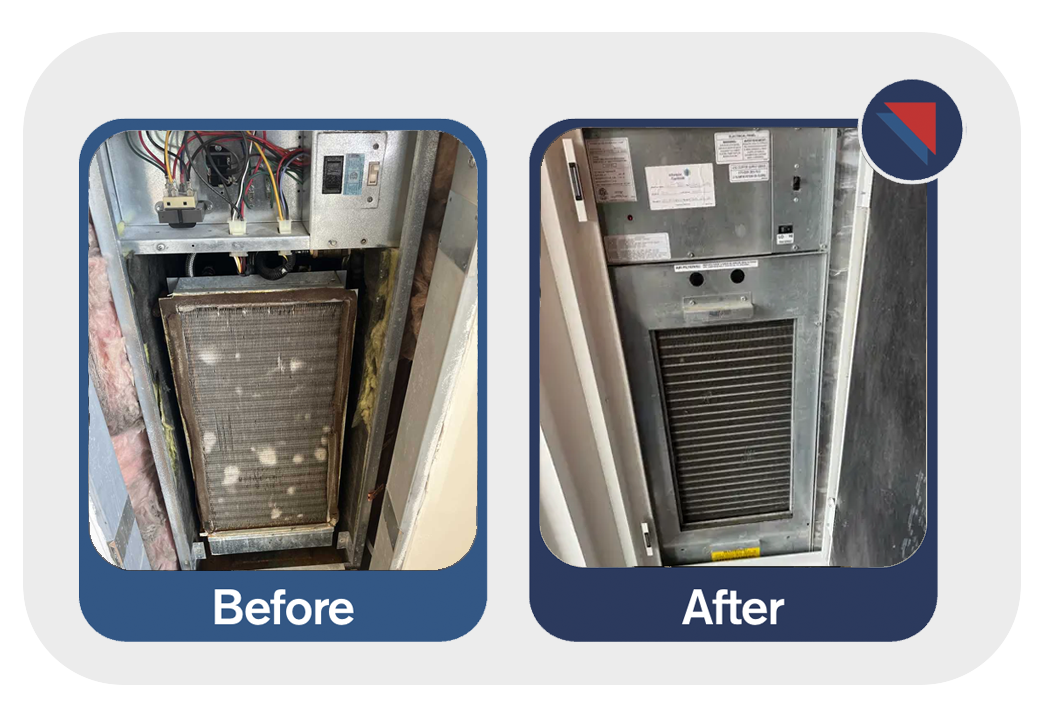
- Musty smell → trapped moisture, dirty coil, or early-stage microbial growth (especially after cooling season)
Common causes (what’s actually happening)
Fan coils in Toronto condos are simple systems, but condo buildings add a twist: your unit depends on building-wide heating/cooling supply and settings. Most service calls come down to these realities:
Mode/seasonal changeover conflicts
- Many condos switch between heating and cooling seasonally. If the building is still in heating mode, your fan coil can blow air but won’t cool (and vice versa).
Airflow restrictions
- A clogged filter or blocked return grille reduces airflow, making it feel like the system “isn’t working” even when it is. Poor airflow also increases noise and can worsen moisture issues.
Control issues (thermostat, sensors, or wiring)
- If the thermostat isn’t calling properly (wrong mode, schedule, dead batteries, incorrect setpoint), the fan may not run or may run without changing temperature.
Valve/actuator problems
- In many fan coils, a valve opens/closes to allow heating/cooling water to flow through the coil. If it’s stuck or the actuator fails, you’ll often get airflow with little to no temperature change.
Drainage and condensate problems
- During cooling, moisture should drain away. A blocked drain line or damaged drain pan can cause leaks and water damage quickly.
Blower motor wear
- Weak airflow, intermittent operation, or unusual noise can point to a blower motor or capacitor issue (common in older fan coils).
If you’re dealing with repeated issues, it may be time to consider repair vs. replacement—especially for older units with recurring leaks or motor failures. (More on that below.)
What you can do right now (safe steps)
Safe checklist (no tools, no risk):
- Confirm the thermostat is set to the correct mode (Heat/Cool/Auto) and the setpoint is clearly above/below room temperature.
- If your thermostat uses batteries, replace them (if applicable).
- Check for a schedule or “away” setting that might be limiting runtime.
- Ensure the fan setting is appropriate (Auto is typical; On can help test airflow).
- Make sure the fan coil’s access panel is closed (some units won’t run if a safety switch isn’t engaged).
- Clear obstructions from the return air grille and supply vents (furniture, curtains, dust buildup).
- If your unit has a filter you can access safely, check whether it looks visibly clogged; if it’s overdue, book maintenance rather than forcing operation.
- Look for visible water near or under the unit. If present, stop running cooling and move to “When to call a professional” below.
What to document (saves time on service day):
- Take photos of the thermostat screen (mode/setpoint), the unit area, and any visible water staining.
- Note when the issue started and whether it’s constant or intermittent.
- If your building has a portal or notices about changeover, note the date.
For routine performance and prevention, Hudson offers in-suite service that includes cleaning and checks that directly reduce these common problems: fan coil maintenance.
When to call a professional
Call a professional if you notice any of the following:
- Active leak or water pooling (same-day priority to prevent damage)
- Burning smell, smoke, or tripping breakers (stop using the unit and call immediately)
- No heat in winter or unsafe indoor temperatures (urgent, especially for seniors/children)
- Airflow is extremely weak even after basic checks
- Repeated musty smell or visible contamination (don’t ignore indoor air quality)
- Loud mechanical noises that persist (rattling/scraping can lead to bigger failures)
- Air blows but never changes temperature over 30–60 minutes (often valve/actuator/flow issue)
If it feels urgent (no heat, major leak, electrical smell), use Hudson’s emergency HVAC repair service pathway.
Typical timeline & what to expect
During a typical in-suite visit, a technician will:
- Confirm building mode/changeover context and your thermostat call
- Inspect airflow, filter condition, coil cleanliness, and drain pan/drainage
- Test key components (controls, fan operation, temperature change across the coil)
- Identify whether the issue is maintenance-related, a part failure, or a building-side supply issue
Typical timeframes:
- Many diagnosis visits are completed within 1–2 hours, depending on access and the issue.
- If parts are required (e.g., motor/actuator/valve-related components), timing depends on model compatibility and sourcing.
What commonly delays service:
- No clear photos or description of symptoms
- Access constraints (tight closets, blocked mechanical area)
- Building rules (booking elevator time, concierge coordination, work-hour restrictions)
- Seasonal surges (first heat/cool snap in Toronto)
Cost factors (if relevant)
Costs vary widely between a simple adjustment and a parts replacement. The biggest variables are:
- Whether it’s maintenance (cleaning, drainage clearing) vs. repair (failed component)
- Fan coil type, age, and access difficulty
- Part availability and whether a compatible replacement is needed
- Whether there’s water damage risk that requires immediate work
- After-hours or emergency scheduling needs
If you’re deciding between fixing an older unit vs. upgrading, a service visit can also help determine whether a longer-term solution like a retrofit makes sense: fan coil retrofit.
FAQs
Why is my fan coil blowing air but not heating or cooling?
Often it’s a mode/changeover issue (building still in the opposite season) or a valve/actuator problem that prevents hot/cold water from flowing through the coil.
How do I know if this is a building issue or my unit?
If multiple neighbours have the same complaint (especially “no cooling” during shoulder seasons), it may be building-side. If it’s only your suite—especially with noise, weak airflow, or leaks—it’s more likely unit-side.
Is a small leak “okay” if it stops?
Even a small leak can reappear and cause damage. Treat any water around a fan coil as a priority—condo water damage escalates fast.
What should I tell the technician when I book?
Share: thermostat mode/setpoint, how long the issue has been happening, whether airflow is weak, any noises, and clear photos of the unit area and any water staining.
How often should a condo fan coil be serviced?
A practical rule is annual maintenance (and more often if you have pets, allergies, or heavy usage). Regular cleaning helps prevent weak airflow, odors, and drainage issues.
Next steps (CTA)
If your unit is not performing normally, start with the safe checklist above, then book the right service:
- For most issues (weak airflow, inconsistent heating/cooling, noise, seasonal tune-ups): fan coil repair & replacement
- For recurring performance issues or older systems: fan coil maintenance
- For urgent problems like no heat, active leaks, or electrical smells: emergency HVAC repair
If you want help, contact us and we’ll guide you to the right next step based on your symptoms and building type.
Contact Hudson
- https://hudsonhvac.ca/contact.html
- 📞 +1 (437) 448-0640
- 📧 service@hudsonhvac.ca